
Adventure, baby!

freelance

Life as a blogger: how I pay the bills

Life As A Blogger: How I Pay The Bills

I had my first rude comment on my blog this week. Considering I think my blog is pretty vanilla in tone, I was surprised that I’d managed to attract anger in anyone with my boring little travel blog, but I guess I did.

The person didn’t even have the guts to write an actual comment with their name. Instead, they signed up to my mailing list with a fake email account: “wow-you-have-a-rich-hubby-youdontneedtowork@gmail.com”.

Wooooooooooooowzas. I was so taken aback. Whoever was cowardly enough to write this sounds to me like they’re suffering from the ol’ green eyed monster. Jealous of a lifestyle that is very carefully curated to make it look like I travel non-stop and do nothing but eat out and go to shows with my kid.

And while some of my life is like that, the majority of it isn’t. Most of the time I am working my ass off to pay bills.

I wanted to shatter the illusion that this person might have that my life, and bloggers like me, live some kind of charmed life, just because our blogs and social media accounts might make it look like we do. Hello, it’s called branding and a marketing plan.

I want to make it clear that bloggers like me share a carefully curated image of ourselves to represent our businesses, but underneath that we are some of the hardest workers you will ever come across. Most bloggers, like myself, juggle family, children, paid work AND our blogs on top of it. We don’t spend our evenings watching Netflix or reading a book. Every spare second is spent working on our blogs and social media accounts.

I can’t speak for all of the bloggers out there, but I personally do not have a rich husband, so I do have to work. Golly, I wish I did have a rich spouse! It sounds pretty nice to never have to worry about money and to just be able to faff around on my little blog all day long.

I actually only work on my blog in the evenings after my daughter has gone to bed. During my work hours, during the day when she is at school, I work for various publications and copy writing services to earn money.

Occasionally I am able to make money through my blog. This is one goal of mine to increase, as it’s a dream to make money from a hobby that I love. My blog has enabled me to receive a opportunities I otherwise wouldn’t have gotten to do, such as seeing shows or attractions in return for reviews. I am extremely thankful for opportunities like this as they help keep our lifestyle costs down, and enable us to do and see more.

In general, however, I’m just a normal gal, working incredibly hard to bring in work to help support my family.

I hope this gives a bit more insight into the life of a blogger. If you have any questions, please write them below. I’m happy to answer anything.

Freelancer Diaries: Etiquette and Playing Nice

Freelancer Diaries: Etiquette & Playing Nice via christineknight.me

Making a living as a writer, as opposed to just blogging my little heart out, has been such an interesting learning curve. In my previous full-time roles I was representing big businesses who people wanted for their own business’ success. Being a writer is basically being on the other side of that business model. I’m now the person reaching out to big publications wanting their exposure or profile for my resume, or wanting to be paid to write for them.

As such, I’ve discovered how important etiquette is when balancing the fine line between being just the right amount of assertive, such as when introducing myself and pitching story ideas, and polite, because no one wants to work with an aggressive ego maniac.

Etiquette will get you a long way when working with editors, who can get hundreds of pitches and queries a week from writers just like you. I wanted to share a few tips on how to build relationships that will last and bring you repeat work.

Freelancer Diaries: Etiquette & Playing Nice via christineknight.me

Be polite
First rule of life, as far as I’m concerned: be polite. Thank people for their time. Remove weak words out of emails, like “just” and “think” and keep the tone strong, but at the same time polite. It’s a fine balance. It will be likely you’ll need to follow up with most editors various times as they are some of the busiest people you’ll ever meet. I suggest waiting at least a week between following up between the first email and second, then 2 weeks between the next email, and then, after another two weeks, sending a new email with new pitches. All very politely, of course.

Do your homework
Before pitching ideas, look at their site/publication. What have they already covered in the last few months? What topics do they focus on and avoid? Sending over pitches that are not in line with what they do is a waste of both their time and yours.

Be assertive
But not rude. Never, ever rude. Never harass repeatedly with frequent follow up emails, or demand responses. That’s a surefire way to have your emails send to the trash.

Be 100% professional
Nail the word count. Run spell check. Get your article in BEFORE the deadline. Fulfil the brief exactly. Keep questions to the editor to a minimum (questions = extra work for them). Be easy and pleasant to deal with. Build a name for yourself as someone who delivers what the publication needs with zero fuss.

Deliver clean copy
Get a friend to read over your copy to make sure you didn’t miss anything. There is no better feeling than filing copy and seeing it published soon after with zero changes made by an editor. Your editor will also love you for this as it means no additional work is needed by them.

Be thankful for feedback
Writing can be subjective and highly personal, and therefore hard to know how to respond to edits requested by editors. While my first reaction might be, in my head, that the piece was great as it was, that’s only my pride speaking, not the truth of the situation. The changes my editors suggest always improve my piece, as well as helping me better my writing skills in general. I always, ALWAYS, thank editors for their time giving me suggestions on changes to be made.

What are your tips on building a lasting relationship with editors?


How To Deal With A Crappy Day

How To Deal With A Crappy Day via christineknight.me

I usually try to keep this blog upbeat, but I’m not an upbeat person all the time. I’m not overly resilient (although I’d like to be!) and I have my share of crappy days where I just feel like everything is going pear shaped. Particularly work-wise. I find it harder than I’d thought to keep up my spirits when working as a freelancer when I have these types of days as there isn’t the social environment of an office to distract me. 

If you’re having a day like this (and I’m having one today!) this is how I deal with them and come out the other side feeling positive again.

Wallow
Own your feelings for a few minutes. Yep you feel like crap, a bit worthless, unemployable, a failure. I love a good wallow. Sometimes wallowing is accompanied by whining or wine. Both are acceptable in small doses.

Work out why
Why is today in particular getting you down? For me it’s often that I’ve had a shocking nights sleep and I’m tired and have a headache. I also feel like this when I have a bit of FOMO – like everyone is doing something awesome or getting great opportunities except me. Which is rubbish, but sometimes it still feels like this.

Do something productive
Once I’ve shaken myself out of the pity party, I try and find a positive way to turn around the bad day. Feeling low because I don’t have work published in a certain magazine? Look up the editor and email them a pitch. Or research other similar sites or publications and pitch to them instead. Feeling lonely? Email a few friends and suggest getting together. Missed out on a media event? Ask someone who went directly who organized the event and email them, introducing yourself and asking to be put on their media list for next time.

Do something to feel better
Getting endorphins flowing helps me when I’m feeling down. I go for a walk, take a barre class, do some yoga in the living room. I try to put all of the worries out of my heard and think about absolutely nothing. On days when I’m too exhausted to do anything else, instead of flogging a dead horse I spend some time taking care of myself like getting a pedicure or reading a book for an hour just to calm my mind.

Get busy
You can’t force creativity. On days like this I can’t write anything useful, it’s all a forced incoherent mess. Instead of wasting time staring at a blank screen I do all the “busywork” I’ve been putting off. Paying bills, processing photos, replying to emails. I feel as though I’ve accomplished something and also freed up some time that can be used in the future for other creative projects.

How about you? How do you deal with crappy day blues?

Linking up with Bron.

Rejection is not a four-letter word

Rejection is not a four-letter word via christineknight.me

Ahhhh rejection, I know you well. We have been close friends for many years now. It’s only in recent times, however, that I’ve learned to stop taking it personally when my ideas are met with a rebuff, or, worse, no response at all.

One of the lovely bloggers in my Aussie Parenting Bloggers Facebook group recently posted that she was feeling down after being rejected a lot, and it made my heart hurt for her. Rejection sucks! It really does. Particularly for a creative person like a writer, when what you’re pitching is really yourself and ideas. Rejection can feel like a stab through the heart – it’s sending a message that you and your words are not good enough.

After a few emails that all have the same generic Dear John “thanks but no thanks” reply to requests for freelance assignments, it’s hard to keep self confidence up.

Maintaining confidence is one of the hardest things about being a freelance anything. Self belief in the face of constantly being told “no, you’re not right for us”. Ouch. It hurts.

I’ve been writing as a freelancer now for about three years. I’ve had more rejection emails than I can count – and I’ve lost track of the number of inquiries I’ve put out there that haven’t been responded to.

I want every other writer just starting out to know that you are not alone. We all face rejection (I get rejected daily. Honestly.).

Each rejection is one step closer to an acceptance. You have to keep trying and putting yourself out there and, as hard as it is, not take rejection personally.

When you get a rejection email (or worse, no response), repeat to yourself, “It’s not about me”. Because it’s not about you. Whatever you were pitching wasn’t a good fit for the publication or the editor was too busy to respond. Neither of these mean that the quality of your ideas or words isn’t good enough to be published.

Everyone who has made anything of themselves has faced similar rejection at some stage. The wonderful children’s author Mem Fox told me in an interview last year that her famous book, Possum Magic, was rejected by published 10 TIMES before it was accepted and published. Just let that sink in.

If Mem had given up after the first few rejections we would not have one of the most famous Australian children’s books ever written.

The next time you get a rejection, remember it’s not you, it’s them. Remember Mem Fox, and have the courage to keep on trying.

Where I Work (AKA How I Manage Being A WFHM)


Where I work via christineknight.me

I see a lot of beautiful blog posts from travel bloggers (I’m looking at you here, Girl Tweets World!) who work from exotic locations on a regular basis. I thought today I would share a bit about where I generally work as it’s a lot less, um, fancy and relaxing.

Here is an example of my week and how I get work done while working freelance and also being home with my threenager.

Where I Work via christineknight.me

Monday
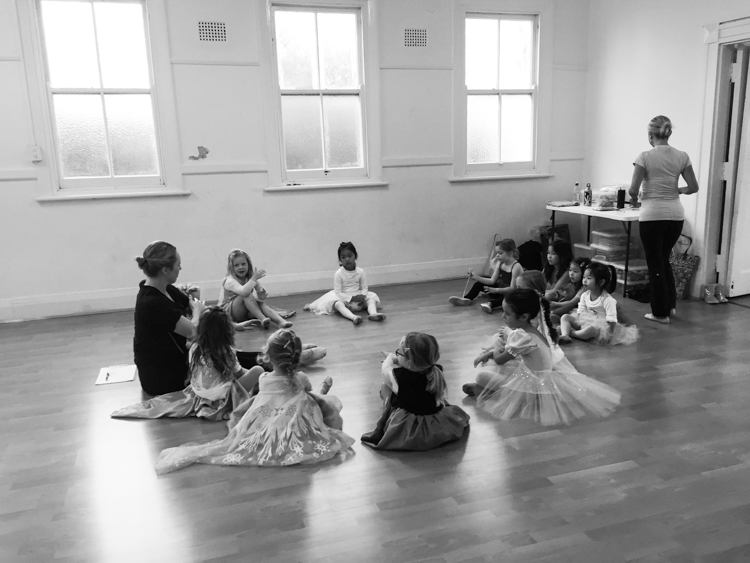
Monday is ballet day and now that Cheese is in a drop off class, I can sit outside with my laptop and write while she is fluttering away. I set up tethering on my iPhone to give me a bit of internet so I can still get something done while she’s dancing.

Where I Work via christineknight.me

Since it’s school holidays, this week she has a special Frozen-themed ballet class, and while I’m trying to write, all I can hear is 15 preschoolers screeching “Let it gooooooooooo!” at the top of their lungs. I’m also sitting on a concrete step, which is getting colder and more uncomfortable by the minute. The rest of the day I put my phone and laptop down and take Cheese to see her grandparents or friends.

Where I Work via christineknight.me

Tuesday
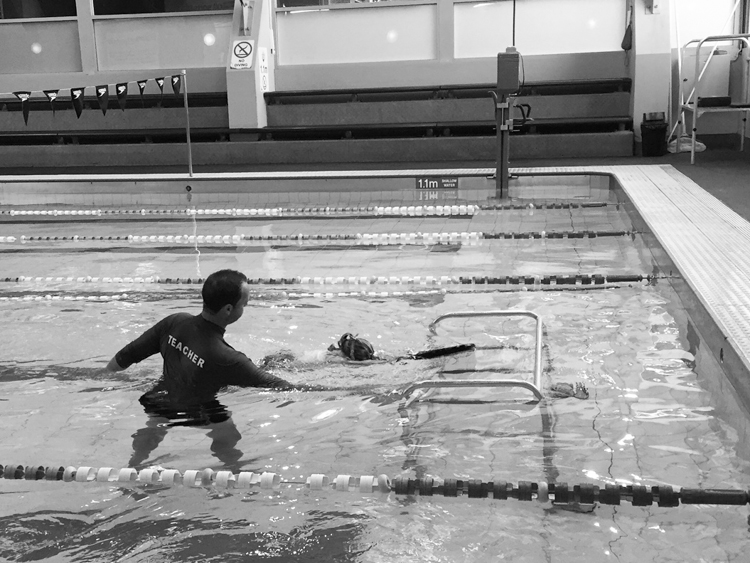
Tuesday is swim day for Cheese and I sit on the side of the pool replying to anything urgent on my phone, jotting down article ideas and following up on pitches while simultaneously telling Cheese to put her bottom on the pool step and to stop squirting water out of her mouth at the kid next to her. Tuesday is, obviously, not a work day. After swimming we often go to a playdate, playground or park. I love how in Sydney we can be outdoors all year around, except for the torrential rain days.

Where I work via christineknight.me

Wednesday to Friday
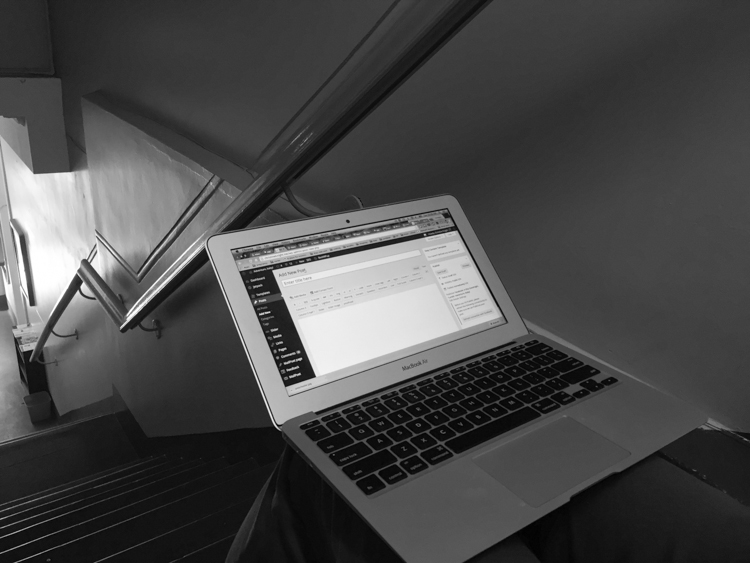
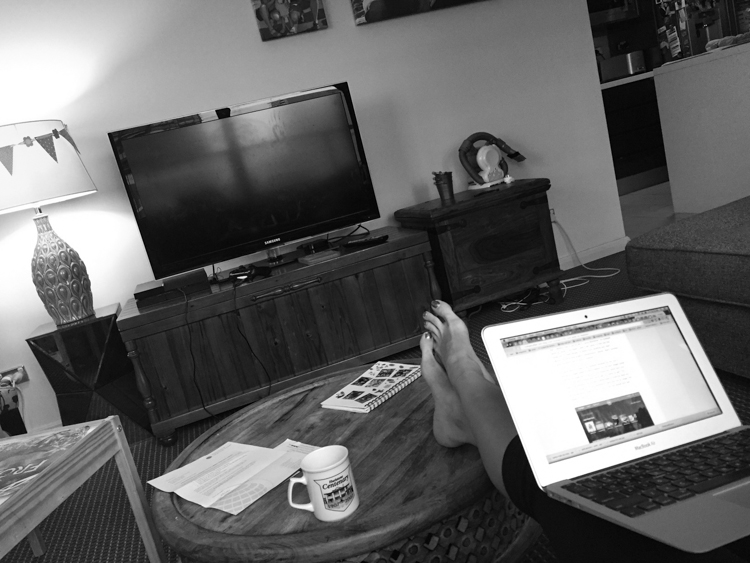
These are my usual work days while Cheese is at preschool 9-3. After a quick gym session (I’m loving the Ballet Barre classes), I work from my living room couch. I do not have a designated workspace as our apartment is just too small. My husband also works from home, so I do have an office mate to bother when I need some companionship, but I generally don’t see many other people except for Jayne from Girl Tweets World, who lives near me and has a similar freelance working schedule as I do.

Weekends and evenings
I do a lot after Cheese goes to sleep, pretty much every night of the week. This is when I work on social media, edit photos, finish up blog posts and reply to blog comments and emails. I try to switch off at around 9:30 and watch a TV show or read a book after that.

Working freelance and from home is great in many ways. The absolute biggest plus is that is gives me so much freedom. I can spend a lot of time with Cheese, and also work towards my own career/business goals at the same time. I also set my own goals and priorities. While I do have clients I answer to for the work I do, I am the one who decides what i think is important to work on for my own progression, rather than having a manager tell me what I should be working on to benefit a company.

On the down side, it doesn’t pay as well as a regular office job, and there is a lot of unpaid work that needs to be done, like pitching work, finding clients, networking to get more work, etc, and it can also get a bit lonely and disheartening if it’s a period of not much success. I find the best way to deal with this is meeting with friends when I can, particularly people who are attempting the same career path as I am.

I’ve been thinking of launching a video or blog series on working as a freelancer, to give tips to anyone thinking of a similar path. I would love to know any questions you have about what I do that I should cover in the series.

Linking up with Grace and Bron.