Adventure, baby!

freelance writing

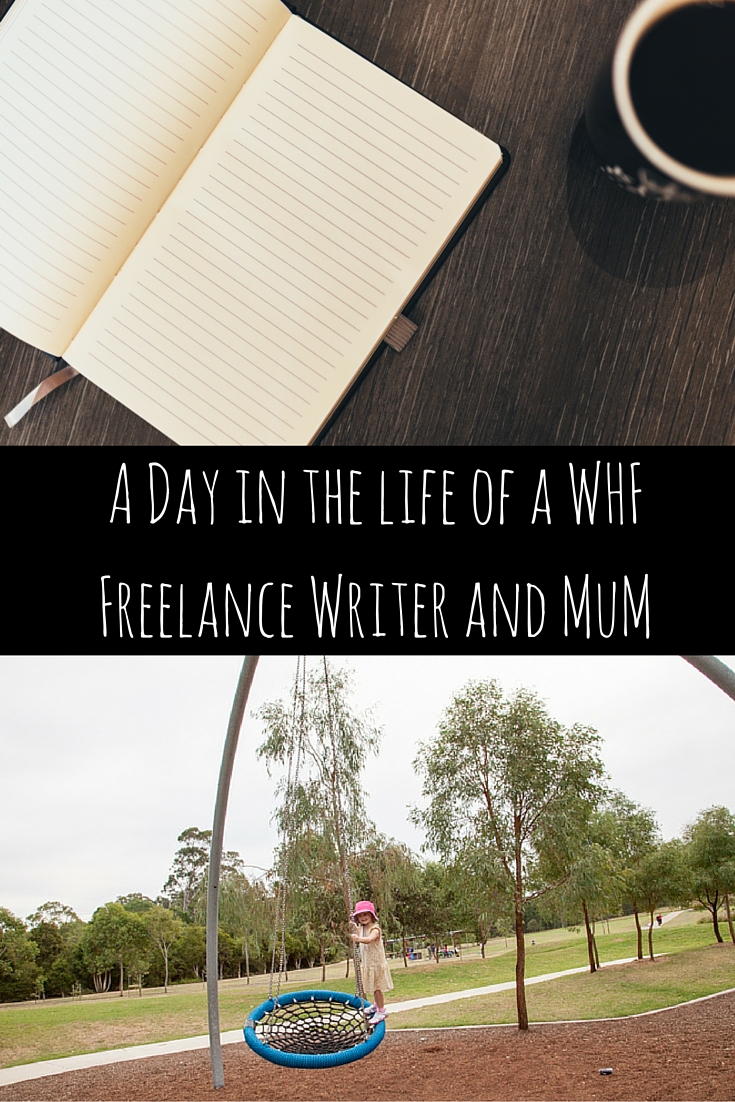
A Day in The Life of a WHF Freelance Writer/Blogger and Mum

A Day in the Life of a WFHFreelance Writer and Mum

My excellent friend Jayne at Girl Tweets World recently wrote this hilarious look at a day in the life of a non-travelling travel blogger. I absolutely love peeks into people’s lives, especially when they are as funny as Jayne is.

While Jayne and my jobs are fairly similar (we are both WFH writers/bloggers), thinking about how different a child makes the schedule inspired me to write my own day-in-the-life post.

On Mondays and Tuesdays I am with Cheese all day, and there is zero work time, so this is our schedule Wed, Thur and Fri, which are the days she is in preschool. Some times I have a fabulously exciting media event to attend, or a high tea to review, but this is what the majority of my days look like.

7am: Woken up. Usually by a tiny arm thrown around my neck in a gleeful hug, followed by mushy face kisses. If it’s after 7am I’m thrilled. If it’s before 7am I might throw her a yoghurt pouch and turn on Octonauts and try to catch a few more ZZZs.

7:15am: Pull myself out of bed, stumble towards kitchen and turn on kettle to boil the first strong black tea of the day. Imperative for getting anything done.

7:30am: Get Cheese ready for school. I make her lunch the night before so all I have to do is put the lunch boxes and water bottle in her backpack, and double check I packed her hat and spare outfit.

8am: Try and convince Cheese to stop playing, eat her breakfast, and get dressed for school.

8:20am: Remember I need to shower as well and duck in while Alec gets Cheese to brush her teeth and put her shoes on.

8:30am: Out the door to take Cheese to school. It’s about a half hour drive to get there.

9:30am: Home from the school run and ready to start my day. I spend about 30 mins to an hour answering emails, checking in on social media, posting blog posts or images and a bit of faffing around before I start the real work.

10:30-12pm: Solid work time, where I usually complete freelance writing pieces for clients. This might be copywriting for a business website, or writing an article for a travel or parenting website.

12pm-12:30pm: Lunch time. Once a week or so I might meet up with a friend but I have such limited work time that I don’t do it as often as I’d like. Alec and I both work from home so you’d think we would have lunch together more, but we just can’t find the time. I usually make smashed avocado on sourdough with roasted tomatoes and eggs.

12:30-2pm: I finish off any remaining work I might have, but more often than not I spend the time chasing information I need for work, following up on pitches, replying to new emails or sending out new work pitches. If it’s a particularly slow work week I might spend an hour working on a blog post.

2pm: I finish work for the day and take myself for a walk. I like to listen to podcasts while I work, particularly Being Boss.

2:30pm: I drive to pick up Cheese from school and wonder how the time went so quickly.

3pm: Pick up Cheese right on time. If I’m late she gets upset, so I have to make sure I’m there when the door opens. I’ve also seen her try and bolt out the door so it’s always good to be early so she doesn’t escape.

3:05pm: Catch up with Cheese’s teacher – hopefully get a good report for the day, while Cheese whines about how hungry she is. I ask her if she ate her lunch and she always says “No!”. Gee, what a shocker.

3:30-4:30pm: I like to organise play dates for Cheese with her school buddies at nearby playgrounds to let the kids burn off even more energy and so I can catch up with friends at the same time. When we don’t have a play date we will grab blueberry bagels with cream cheese and either do grocery shopping or head to a playground just the two of us.

4:30pm: I drive us home around this time as it’s getting dark and the traffic gets terrible if I wait any longer.

5:30-6:30pm: I play a bit with Cheese, clean out her lunch boxes, make new lunch for the following day, chat with her about what she got up to and who she played with, and make her dinner which she may or may not eat.

6:30-7:45pm: Bath and books time for Cheese. Alec and I take turns reading to her or sitting with her while she falls asleep. I often do the reading so Alec can spend more quality time with her (AKA doing the bedtime sleep battle).

7:45-8:30pm: I make dinner, clean up after Cheese’s dinner and tidy up her toys and general mess while waiting for Alec to emerge victorious from putting the Cheese to sleep.

8:30-9pm: Alec and I eat dinner together. Some days we chat about what we’ve been doing, or what feedback I had from Cheese’s teacher that day. Some days we are too tired to talk and watch TV instead.

9-10:30pm: I work on my blog, edit images, reply to more emails, post pics to Instagram and watch TV. I love mindless TV shows like The Bachelor as I can write at the same time and not miss the plot.

10:30-11pm: Bed time! I read a few pages of a book and fall asleep pretty quickly, absolutely shattered. If I’m lucky I won’t wake again until 7am, but often little Cheese will come in and wake us up wanting milk, more food or a cuddle.

Get more tips on becoming a digital nomad with kids here.

Life as a blogger: how I pay the bills

Life As A Blogger: How I Pay The Bills

I had my first rude comment on my blog this week. Considering I think my blog is pretty vanilla in tone, I was surprised that I’d managed to attract anger in anyone with my boring little travel blog, but I guess I did.

The person didn’t even have the guts to write an actual comment with their name. Instead, they signed up to my mailing list with a fake email account: “wow-you-have-a-rich-hubby-youdontneedtowork@gmail.com”.

Wooooooooooooowzas. I was so taken aback. Whoever was cowardly enough to write this sounds to me like they’re suffering from the ol’ green eyed monster. Jealous of a lifestyle that is very carefully curated to make it look like I travel non-stop and do nothing but eat out and go to shows with my kid.

And while some of my life is like that, the majority of it isn’t. Most of the time I am working my ass off to pay bills.

I wanted to shatter the illusion that this person might have that my life, and bloggers like me, live some kind of charmed life, just because our blogs and social media accounts might make it look like we do. Hello, it’s called branding and a marketing plan.

I want to make it clear that bloggers like me share a carefully curated image of ourselves to represent our businesses, but underneath that we are some of the hardest workers you will ever come across. Most bloggers, like myself, juggle family, children, paid work AND our blogs on top of it. We don’t spend our evenings watching Netflix or reading a book. Every spare second is spent working on our blogs and social media accounts.

I can’t speak for all of the bloggers out there, but I personally do not have a rich husband, so I do have to work. Golly, I wish I did have a rich spouse! It sounds pretty nice to never have to worry about money and to just be able to faff around on my little blog all day long.

I actually only work on my blog in the evenings after my daughter has gone to bed. During my work hours, during the day when she is at school, I work for various publications and copy writing services to earn money.

Occasionally I am able to make money through my blog. This is one goal of mine to increase, as it’s a dream to make money from a hobby that I love. My blog has enabled me to receive a opportunities I otherwise wouldn’t have gotten to do, such as seeing shows or attractions in return for reviews. I am extremely thankful for opportunities like this as they help keep our lifestyle costs down, and enable us to do and see more.

In general, however, I’m just a normal gal, working incredibly hard to bring in work to help support my family.

I hope this gives a bit more insight into the life of a blogger. If you have any questions, please write them below. I’m happy to answer anything.

Freelancer Diaries: Etiquette and Playing Nice

Freelancer Diaries: Etiquette & Playing Nice via christineknight.me

Making a living as a writer, as opposed to just blogging my little heart out, has been such an interesting learning curve. In my previous full-time roles I was representing big businesses who people wanted for their own business’ success. Being a writer is basically being on the other side of that business model. I’m now the person reaching out to big publications wanting their exposure or profile for my resume, or wanting to be paid to write for them.

As such, I’ve discovered how important etiquette is when balancing the fine line between being just the right amount of assertive, such as when introducing myself and pitching story ideas, and polite, because no one wants to work with an aggressive ego maniac.

Etiquette will get you a long way when working with editors, who can get hundreds of pitches and queries a week from writers just like you. I wanted to share a few tips on how to build relationships that will last and bring you repeat work.

Freelancer Diaries: Etiquette & Playing Nice via christineknight.me

Be polite
First rule of life, as far as I’m concerned: be polite. Thank people for their time. Remove weak words out of emails, like “just” and “think” and keep the tone strong, but at the same time polite. It’s a fine balance. It will be likely you’ll need to follow up with most editors various times as they are some of the busiest people you’ll ever meet. I suggest waiting at least a week between following up between the first email and second, then 2 weeks between the next email, and then, after another two weeks, sending a new email with new pitches. All very politely, of course.

Do your homework
Before pitching ideas, look at their site/publication. What have they already covered in the last few months? What topics do they focus on and avoid? Sending over pitches that are not in line with what they do is a waste of both their time and yours.

Be assertive
But not rude. Never, ever rude. Never harass repeatedly with frequent follow up emails, or demand responses. That’s a surefire way to have your emails send to the trash.

Be 100% professional
Nail the word count. Run spell check. Get your article in BEFORE the deadline. Fulfil the brief exactly. Keep questions to the editor to a minimum (questions = extra work for them). Be easy and pleasant to deal with. Build a name for yourself as someone who delivers what the publication needs with zero fuss.

Deliver clean copy
Get a friend to read over your copy to make sure you didn’t miss anything. There is no better feeling than filing copy and seeing it published soon after with zero changes made by an editor. Your editor will also love you for this as it means no additional work is needed by them.

Be thankful for feedback
Writing can be subjective and highly personal, and therefore hard to know how to respond to edits requested by editors. While my first reaction might be, in my head, that the piece was great as it was, that’s only my pride speaking, not the truth of the situation. The changes my editors suggest always improve my piece, as well as helping me better my writing skills in general. I always, ALWAYS, thank editors for their time giving me suggestions on changes to be made.

What are your tips on building a lasting relationship with editors?


Pitching Made Easy: How To Ask For Freelance Work

PItching Made Easy: How To Ask For Freelance Work via christineknight.me

Pitching for freelance writing can be a scary thing to do. No one likes being rejected. After giving this freelance writing thing a good go for the best part of a year and a half now, I can tell you that it does get easier. All of it. The cold emailing. The pitching. And even the rejection. Somewhere along the way of sending out too many introduction emails and pitches to count, I suddenly stopped taking it personally if I didn’t land a job.

The thing is, working for yourself is a very personal thing to do. When you pitch stories and ideas, you’re also pitching your skills and experience, so it can feel like a very personal rejection if you’re turned down. What you have to remember is the person you’re pitching to is usually a paid employee of a large company, and they are juggling many freelancers and staff, as well as deadlines and articles of their own, plus reporting to their bosses. To them, your pitch is just a tiny cog in their daily wheel – something they are used to dealing with day in and day out. To them, it’s just work. It’s not personal. If they don’t reply to your email, or dismiss your ideas, it’s not personal. They’re just doing their job.

The lesson for me in this was to not let rejection destroy my self confidence. After being rejected or not hearing from a potential client, I will still go back and try again if I think it’s worth the business. Even if my idea has been shot down, I will still do it, because it’s through perseverance that we succeed.

So this how I approach business for work with a cold email (yes, you can also call an editor on the phone, but I’m a wimp and I prefer emails to basically ever picking up the phone):

Hello Judy,

Lovely to e-meet you. I love “Mum Business Magazine” and am interested in freelance writing for you.

I am a professional writer based in Sydney, Australia. My articles on parenting are regularly published on sites such as the Huffington Post and by businesses such as Fisher Price. You can see my published work portfolio and resume for more information about my work history.

I would love to pitch ideas for articles at “Mum Business Magazine”. Can you please send me your submission guidelines.

Thanks for your time. I look forward to your response.

Christine Knight

Key things to note:

1. Keep it short and to the point
No one has time for long emails. Keep it brief.

2. What can you offer?
What experience do you have? Why are you right for their publication?

3. Hyperlink to resources
Make it easy for the person to find your most important work examples, resume and work portfolio.

4. What do you want?
Submission guidelines will include what topics they accept work for, the word count, if they want photos, if they pay and what the pay rate is. If they don’t have an official guidelines document usually your reply will include at least a few lines that will cover this.

Hope this helps you work up the courage to pitch for paid freelance work. Let me know what you would like me to write about next.

How I Do It: Blog Monetisation

How I Do It: Blog Monetisation via christineknight.me

There are already so many great articles out there about how to monetise blogs, that I’m not going to cover the same ground. Not every blogger is going to make it big, or make a 6 figure income from blogging, so I’m certainly not going to say that any blogger can use these methods to make money, because it’s just not true. Many other aspects come into play when enabling a person to make money from blogging. Instead, I’m going to talk about my thoughts on it all, and what works for me.

Briefly, here is a description of the main options for monetising blogs. I like how they are grouped into the four areas. Thanks to Blogger Holy Smithereens at the General Assembly and Etsy blogging night for this idea. If you’re after a full run-down on ways to monetise your blog, head over to ProBlogger and this post on 60+ ways to make income from your blog.

Advertising
Display advertising, sponsored posts, ambassadorships

Affiliate programs
Eg Amazon

Products
eBooks, courses, merchandise

Services
Freelance writing, copywriting, designing, consulting, public speaking

When you’re starting a blog, your traffic is going to be pretty small. Even if you’re been blogging for a while, your traffic might still be small, which is ok. It does rule out generating decent money from avenues that require more traffic though, such as the advertising option. And while some brands are willing to pay sponsored posts for blogs with very little traffic, most are not.

I’ve had the most success is with the “services” section. I have had an occasional sponsored post, but with my blog not generating huge amounts of traffic, I’ve had a lot more success making money by using my blog as showcase of my writing and photography ability to help me get paid work as a writer.

A blog can be an extremely good way to promote your skills to prospective clients. You can point back to your blog to show prospective clients your writing style on relevant topics. I certainly used my blog to start pitching my ability to write parenting and family-travel articles.

Want to get freelance writing? Here is my advice.

1. Start at the beginning
There’s no fast road to the top. I started by contacting a few websites I wanted to write for, and emailed their contact listed under a “submissions” or “contact” section. As I knew these websites wanted submissions, it was a bit less scary to contact them cold.

I did a few articles here and there in the topic areas I wanted paid work for free to give myself a few pieces my resume before contacting slightly larger sites for paid work. Even though I wasn’t paid, I still had to do the whole pitching process and write something decent to get it published.

2. Put together a portfolio
All of my published work links go onto my portfolio website, which was easily set up in WordPress. I update it with every new piece of writing I have published so it’s always up to date if a potential employer looks at it.

3. Remember it’s a small world
One of my best writing gigs came through company who contacted me after seeing my blog and wanting similar content for their own site. The initial proposal for our partnership wasn’t quite right but, a year or so later, a blogger friend was employed as their editor and immediately thought of me as a good fit as a paid writer. This was a serendipitous meeting of two contacts that I kept on good terms paying off at the same time. So even if you are approached for something that isn’t quite right, be sure to part on good terms as you never know what benefit will come from the relationship down the track.

4. Work your contacts
People won’t know you’re after freelance work unless you put it out there. If you have any friends, or even old work colleagues, who are in areas where you want freelance work, email them about it. Let them know you’re looking for this kind of work and you’d be very grateful for them to put you in touch with whoever hires/commissions freelancers in their business. The majority of people will respond positively to this kind of request as it doesn’t put any pressure directly on them to find you work – only to make an introduction. Remember to pay back their helpfulness by throwing useful information or contacts their way in the future.

5. Put yourself out there
The next step is what I found to be initially the hardest. As an introvert, I struggle with talking to people I don’t know, or approaching people who are strangers. If I wanted work though, I had to get over this quickly.

I listed myself on some freelancer websites (some came through with sporadic work, some didn’t), and started building contacts to grow my work portfolio. If possible, in person is always the best way to make a contact, as you’re a face then, rather than just another anonymous email coming through.

Networking events and conferences where editors from publications I wanted to write for would be attending were right up there on my agenda. I was terrified about speaking with the editors or business owners, but I rehearsed my elevator pitch, kept it short, and asked for their card.

For the majority of publications however, I simply cold-emailed them. Do not be scared to do this! It does get easier over time. Some I found the direct information for their editor either through their website or twitter. If you find the editor on twitter, tweet to them, asking for a submissions email address. You can also look for an “editorial” contact email listed on the website.

The key to landing work is to pitch a LOT. You might send out 10 pitches one week, and only hear back from one. The key is volume. That way the rejections and lack of response won’t feel as personal, either (which they’re not!).

5. Follow up
Editors can receive hundreds of pitches a week. Emails fall through the cracks. Follow up a week later. Persistence often has landed me writing gigs that otherwise wouldn’t have happened if I’d been too scared to send that second email.

6. Track everything
I have a spreadsheet where I have contacts and info on where they work, who they represent, when our last contact was and what the pitch status was. I also have a spreadsheet for commissioned work, due dates, payment and pay dates. It helps to keep on top of everything. Every Sunday night I look over the sheets to plan my next week.

I hope this information is helpful! I’d love questions from you on what topics I should cover next. Thank you for reading and good luck with your own freelance endeavours.

Photo credit

Linking up with Grace.

Making a Career Change: How I Became a Freelance Writer

Career Change: How I Became A Freelance Writer

Like many women I know, after having a baby I wanted to change my career direction. In my pre-baby life I worked at Google Australia in publisher management and digital marketing. It was a wonderful place to work and I learned a great deal about online marketing.

In late 2010, my husband, Alec, was offered the opportunity to work at a startup in New York City – somewhere I’d always wanted to live. The same week, we found out I was pregnant. Alec took the job and a few months later we moved and I quit my job. Moving country and preparing for the baby became my new job, and then motherhood when Baby arrived.

I’d already been blogging casually for about four years at that stage, and when we moved to the US to I started to document our expat experiences, and then my pregnancy and new life as a parent.

Without a job and itching to keep my brain active, I upped my blogging game when Baby came along, starting to take it more seriously. I started working on a site with a friend in NYC on kid-friendly dining that expanded to cover other destinations in Sydney and Singapore. I got active in the local blogger community, attended blogging events and started to connect with brands and other bloggers. At night I read about SEO and stumbled my way through building a self-hosted WordPress site.

I also began to put my digital marketing training into practice, working on growing social media channels and subscribers to increase traffic to my blog. The SEM (search engine marketing) experience at Google really helped me to naturally be able to write well for SEO (search engine optimisation, or how to show up in the search results on Google), and I saw organic search becoming a big source of traffic to the blog.

After a while I felt ready to start working again in a small capacity, so I put together a simple WordPress site as my online writing portfolio and resume to send out to prospective employers. By this time I had written guest posts for a lot of other sites, too, and also had quite a decent amount of published work from my first few jobs in the editorial departments of Australian lifestyle magazines, plus from my work in marketing at Google. All together, it was enough to help me start getting a few freelance writing jobs.

Work started coming through all kinds of sources. People approached me through the blog, and I signed up to Contently.com and received work through that for Fisher Price and Electrolux.

Most of the work I have taken on, however, I’ve had to really put myself out there for. I cold-emailed publications after asking for the editor’s contact details, and then pitched the publication ideas for articles. I also attended events where the speakers worked for brands or sites that I wanted to work for, and approached the people after their talks with a quick elevator pitch and request for their business cards.

After getting the contacts I was after, I’d research their publication and pitch stories. It’s time consuming, and there’s a lot of either no responses or straight out rejection. Some days it’s hard to get past this and keep up my confidence to continue, especially since I’m a bit of an introvert.

What helps keep me going is when the articles I write perform really well, such as getting picked up by other publications like the Huffington Post and going viral.

I also love the blogging communities I’ve joined, both in the US and in Australia. Bloggers are very supportive of each other, so even though I spend most of my work days at home alone with a computer, I feel strongly connected to other people in my field and don’t feel disconnected as a result.

Taking the freelance route does not pay wonderfully well so far, but it’s rewarding in many ways. I make my own hours, and get to spend a lot of time with my daughter, who is now 3.5. I really enjoy what I do, too. I get a lot of joy out of seeing my articles helping people – I feel like what I’m doing now has a lot of meaning.

Are you thinking of making a career change, or trying freelance writing? I’ll be writing more in the coming weeks on tips to break into freelance writing, and other posts on what I’ve learned about digital media. If you have any questions you’d like answered, please email comment below or email me at adventurebabyblog.com.

This post was first published over on Thienlan.me.